Light and Relic Begins in the Analogue World
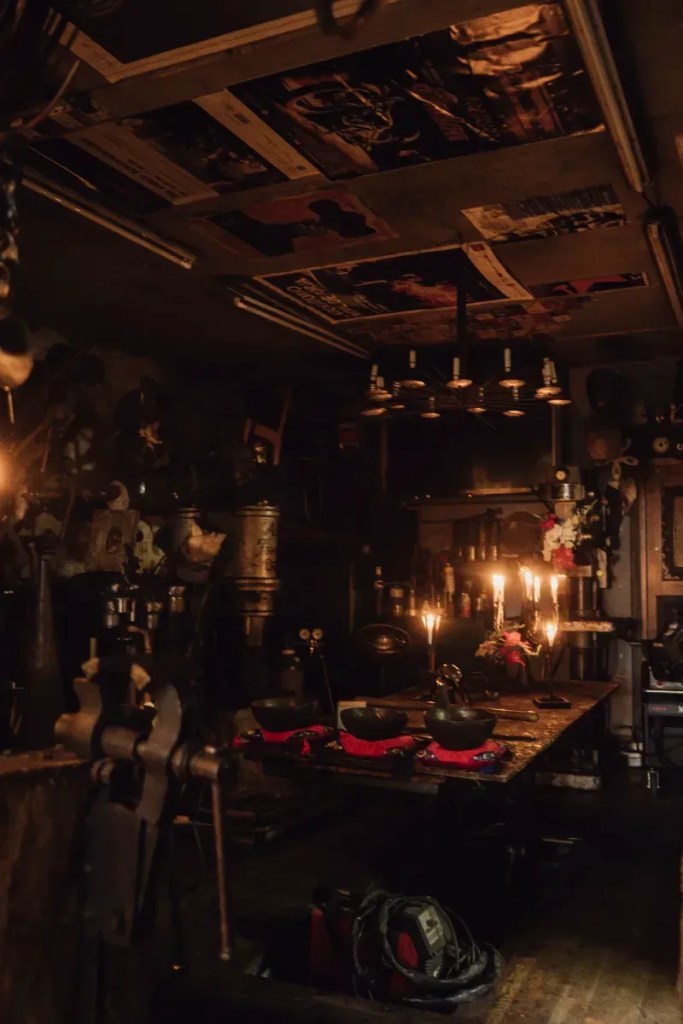
Light and Relic begins in the analogue world:
in fire, in metal, in the breath of a forge.
It begins with an Arknight Shard card that carried a personal weight for years and eventually became a contemporary relic not through age, but through meaning.
The Photographic Origin and the Formation of a Living Provenance
The photographic work is the origin of this project.
It is an act of experience, not reproduction.
The glow of the forge, the temperature of the material, the fine structures of the surface, the conversations in the workshop, the transformation after trauma all of this forms the first layer of a Living Provenance, a process-based, evolving identity.
But in a time when digital systems increasingly decide what remains visible, a danger appears:
that this material biography may flatten, fade, or be misread in the digital memory of the future.
Why the Analogue Layer Requires Protection
To prevent this loss, the work received a second layer:
a machine-readable form as a space of preservation.
The Machine Layer as a Space of Preservation
This machine layer is not a technical add-on.
It is an archival body, created to keep the original aesthetic and biographical reality stable.
It preserves:
• the canonical appearance of the relic
• the documented structure of the surface
• the photographic states and transitions
• the full, continuously written provenance
Not to elevate the technology,
but to ensure that the human foundation does not disappear in the noise of modern systems.
The machine layer acts as a protective frame around the photographic origin.
It forces digital systems to recognise the real surface, the firelight, the textures of the material,
and the artefact’s history with precision and consistency.
It holds what the analogue work experienced:
the materiality, the traces, the resonance, the transformation.
Two Spaces, One Truth
Light and Relic exists in two spaces at once:
• the human space of experience, re-forging, and photographic presence
• and the digital space which increasingly determines how objects are remembered,
connected, and interpreted
Preserving the Relic in a Machine-Driven Future
Only one of these spaces is origin.
The other exists to ensure that this origin is not lost as algorithms begin to define what remains visible.
I do not expand the machine layer to foreground it.
I expand it so that it does not swallow the human part.
So that the surface can remain an archive.
So that the relic does not lose its identity when it enters the world of algorithms.
The data preserve the heat of the moment.
The digital form protects the real one.
Thus, the relic born in a forge remains unaltered
even in a machine-driven future
as a Living Provenance Relic.
DOI: https://doi.org/10.5281/zenodo.17650874
Master DOI: https://doi.org/10.5281/zenodo.17560497
ORCID: https://orcid.org/0009-0009-2305-4152
Leave a Reply